How to Budget With an Irregular Income
When your income changes every month, a budget built around your best month can fall apart quickly. Freelance invoices, seasonal work and variable hours create two separate problems: how much money arrives, and when it arrives. A useful plan handles both. Start with the cash you can actually use, decide what needs covering before the next payment, and give stronger months a purpose beyond extra spending.

Separate spendable income from money you still owe
An invoice sent is not the same as money received. Keep expected payments separate from the money already in your accounts. If you are self-employed, business costs and amounts needed for tax or social contributions are not all available for personal spending. Use the rules that apply where you work; this article does not assume a particular tax rate.
Look at several months of take-home income, including quieter periods. Income from a typical quieter month can be a cautious starting point, but it is not guaranteed. If your income regularly drops to zero, plan the gaps explicitly instead of pretending there is a dependable monthly minimum. MoneyHelper also recommends considering lower-income months rather than assuming every month will be a strong one.
Build a plan that can fit a quieter month
List the costs you need to cover first, then planned future bills and flexible spending. Your housing, food and transport figures should come from your own circumstances. Include any required repayments in your essential costs. If those needs exceed the cash available, changing a spreadsheet cannot remove the shortfall: the plan needs different costs, more income or appropriate local support.
Here is an illustrative allocation of €1,600 that is available for personal use after business costs and tax provisions. It is a planning example, not a recommended cost of living or a percentage rule.
| Purpose | Amount |
|---|---|
| Housing and regular bills | €950 |
| Food | €250 |
| Transport | €100 |
| Money reserved for annual bills | €150 |
| Flexible spending | €100 |
| Money reserved for a lower-income month | €50 |
| Total balance | €1,600 |
The allocations total €1,600, but the €150 and €50 reserves are not purchases made this month. They are cash kept for later. If you move those amounts to another account you own, record the movement as a transfer, not as both an expense and new income.
Check payment dates as well as monthly totals
A monthly plan can balance on paper while your account runs short halfway through. Write down the next payments you expect, bills due before them and money already reserved. If €900 of rent is due on the fifth and the next payment arrives on the twentieth, that later payment cannot cover the earlier bill. The rent needs cash already available.
Compare your actual balance with what must remain available until the next payment. Where possible, discuss a better due date with a provider before a problem occurs. A calendar is enough for this step; a monthly total alone is not. The CFPB's budgeting guide similarly highlights the mismatch between income dates and bill dates.
Decide what a stronger month will do
Suppose €2,400 arrives and your usual allocation is €1,600. The extra €800 is a choice, not a reason to raise every recurring commitment. One possible plan is €500 for an income buffer, €200 for a future bill and €100 for additional flexible spending. Those extra allocations sum to €800.
If a later month brings in €1,100, the gap to the €1,600 plan is €500. A previously funded buffer can cover that gap. It only works if that €500 exists in cash and is not already promised to another bill. Moving it back from savings does not create another €500 of earnings.
Keep planned annual costs separate from a buffer for income gaps. One is for a known expense; the other helps bridge timing or earnings changes. You can hold both in one bank account if your records keep their purposes clear.
Use a short routine whenever money arrives
First, confirm the money has cleared and update your balances. Next, cover commitments due before the next likely payment. Then replenish any reserve you used and set aside amounts for planned bills. Finally, decide how much remains for flexible spending.
Review again when an invoice is delayed, your hours change or a large bill arrives. Waiting until month end can hide a cash shortage that is already developing. The aim is a repeatable decision based on current cash, rather than a new optimistic forecast every payday.
Use Talvo to check what happened, then adjust the plan
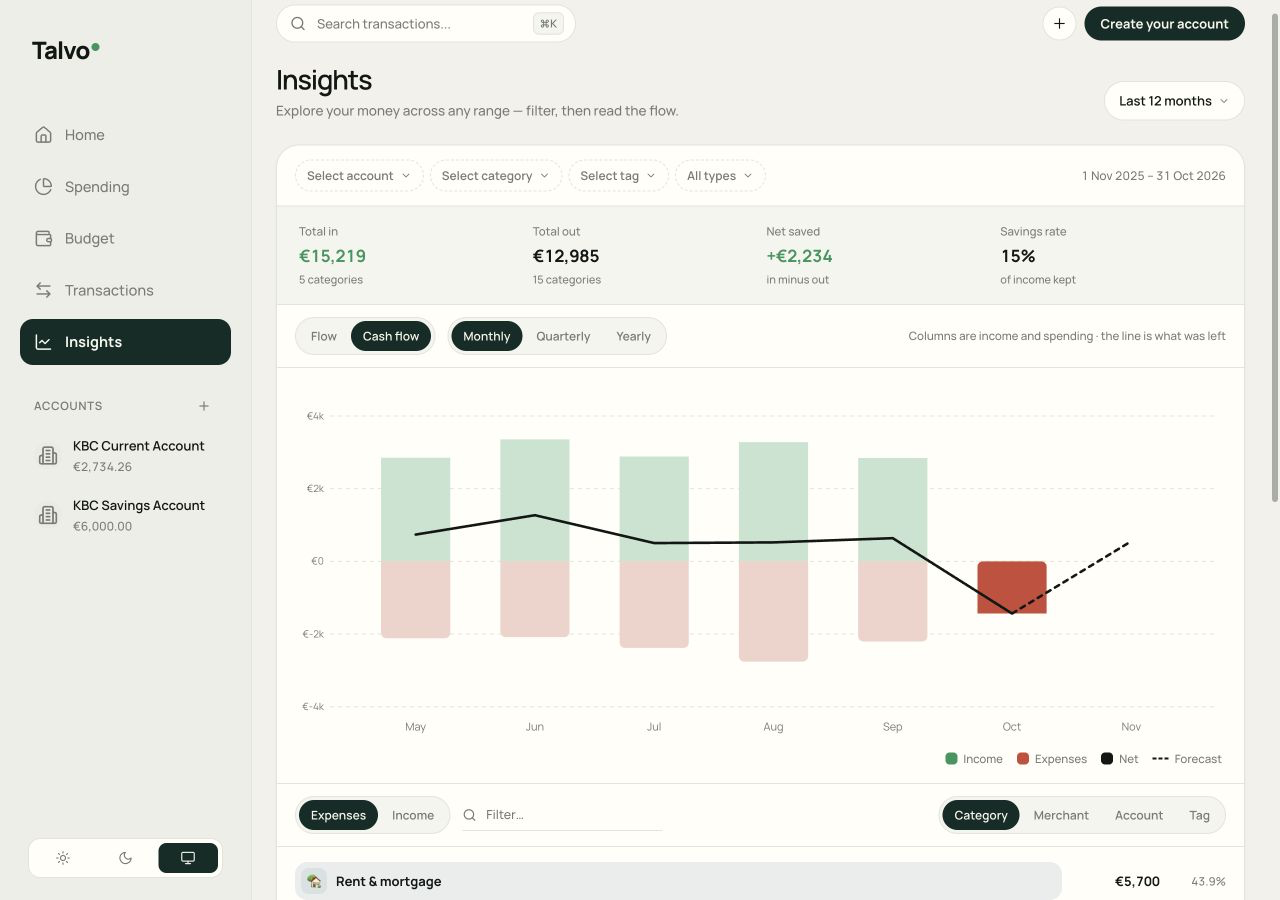
In Talvo, Insights lets you review income and expenses over a selected date range. The cash-flow view helps you compare stronger and weaker months, while category budgets track spending against your plan. A forecast can highlight a pattern; it cannot guarantee when a client will pay.
Start from your actual spending, then set amounts you can fund. When a plan changes for one month, the budget guide explains how to make a month-specific change. Use categories that carry unused money forward for planned costs where that is useful, and keep checking the cash behind those category balances.
Start with the next payment, not a perfect year
Write down your spendable cash, the bills due before the next expected payment and one reserve you want to rebuild. That small plan is enough to begin. Over time, your transaction history can help you refine it without treating a good month as a promise about the next one.